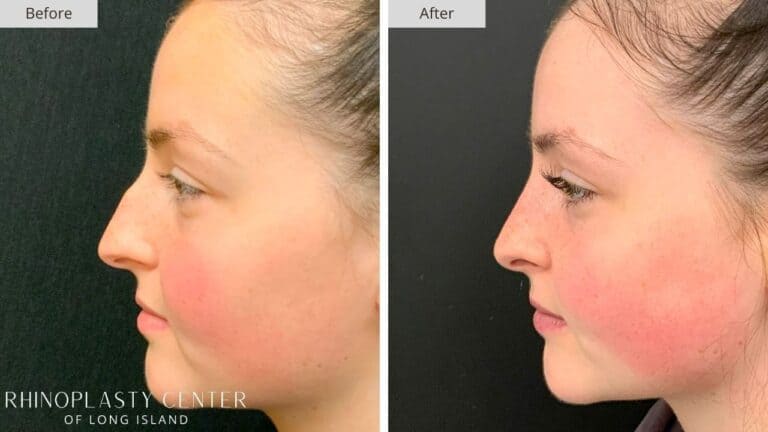
Some rhinoplasty cases involve more than one issue layered together. This patient’s case is simpler on the surface, but it shows how much difference a single structural change can make. The original bridge height created a strong focal point at the center of her face, and that was the main concern we needed to address.
When One Feature Draws All the Attention
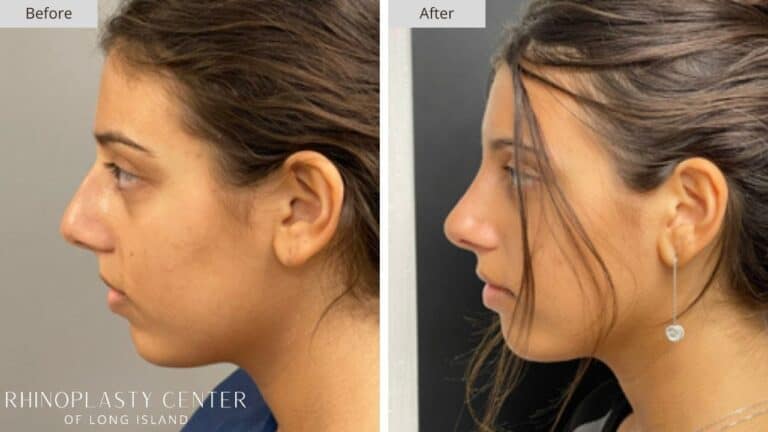
The human eye is naturally drawn to points of contrast and height on a face. A bridge that sits higher than the surrounding structures becomes the first thing a person notices, even before they register the eyes, cheeks, or jawline. This patient’s before photos show that pattern clearly. The bridge height created a strong central focal point that pulled attention away from the rest of her features.
This is a different concern from a dorsal hump that disrupts a profile line at one specific spot. Here, the issue was the overall height of the bridge relative to the face as a whole. Since the bridge sat prominently in the center, it competed with her other features instead of supporting them.

Lowering the Bridge to Restore Balance
Our surgeon approached this patient’s case by lowering the bridge height. This step reduces how far the bridge projects forward and how much it stands out from the surrounding facial structure. Once the bridge sits closer to the level of the surrounding bone and soft tissue, it stops functioning as the dominant feature on the face.
This kind of correction requires careful judgment about how much to lower the bridge. Too little change leaves the original focal point in place. Too much can leave a bridge that looks flattened or disconnected from the rest of the nose. Our surgeon worked to find a height that let the bridge blend into the face rather than stand apart from it.
Reshaping the Tip for a Slimmer, More Structured Look
Alongside the bridge correction, we reshaped this patient’s nasal tip to appear slimmer and more structured. The tip and the bridge work together visually. A lowered bridge paired with a tip that still reads as wide or undefined would leave an unfinished result, since the two areas need to match in proportion and refinement.
Reshaping the tip involves adjusting the cartilage that gives the tip its shape and width. Our surgeon refined this patient’s tip cartilage to create a narrower, more defined point at the end of the nose. This step complements the bridge work, since a slimmer tip reinforces the lighter, less prominent look created by lowering the bridge above it.
How These Changes Affect Facial Expression
Facial expression is not just about the eyes and mouth. The nose plays a supporting role in how soft or strong an expression reads, since it sits at the center of the face and frames the features around it. A prominent, high bridge can add a harder edge to a face’s overall expression, even when nothing else about the face has changed.
By lowering the bridge and slimming the tip, we shifted this patient’s nose from a dominant central feature to a supporting one. The after photos show a face where the eyes and cheekbones carry more visual weight, since the nose no longer competes with them for attention. This is what allows the same face to read as softer and more feminine, without any changes made to the eyes, lips, or cheeks themselves.
What the Photos Show
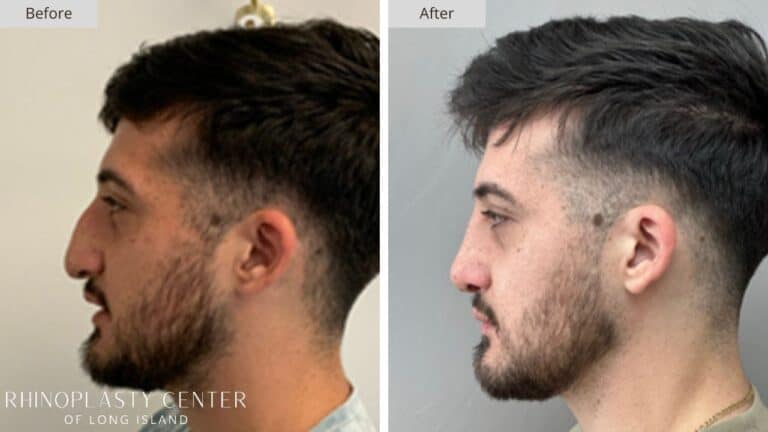
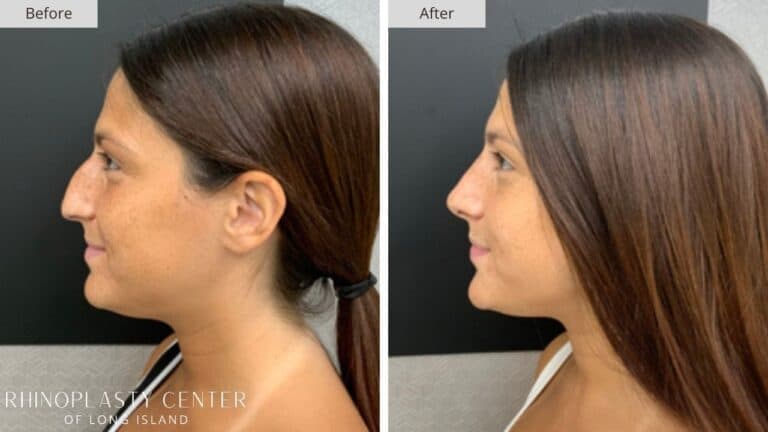
The side profile shows the clearest change. This patient’s before photo shows a bridge that rises well above the surrounding facial plane, creating a sharp, prominent line. The after photo shows a bridge that sits at a lower, more proportional height, blending smoothly into the profile around it.
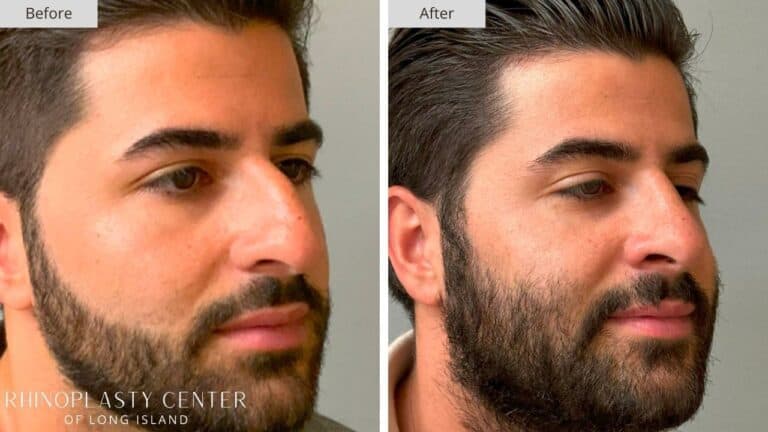
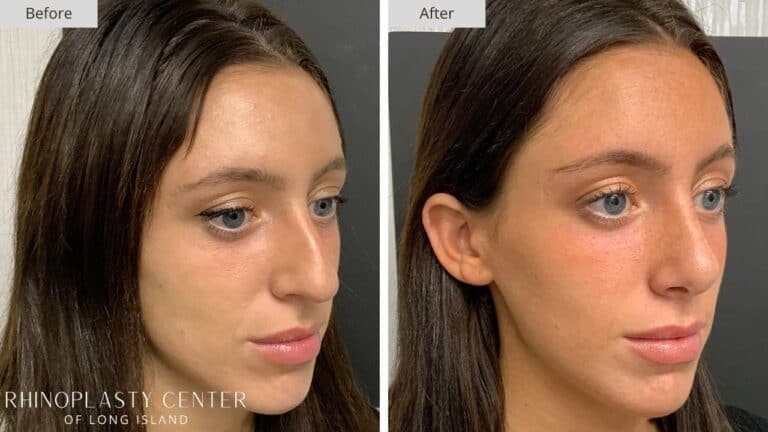
The three-quarter view photos add another layer to this result. They show how the slimmer tip and lowered bridge work together from an angle that captures more of the face at once. The nose now supports the rest of the face rather than pulling focus away from it.
The Result
The nose now supports a softer, more feminine facial expression, with a bridge that sits in proportion to the rest of the face and a tip that reads as slimmer and more structured. The visual focal point that once centered on the bridge has shifted, allowing the rest of this patient’s features to stand out.
Ready to Explore Your Options?
If a prominent bridge has become the feature everyone notices first, a customized rhinoplasty plan can shift that balance toward a softer, more proportional look.
Contact Rhinoplasty Center of Long Island to schedule a consultation and learn what your options could be.