
Bulbous Tip Rhinoplasty on Long Island
If a round or wide nasal tip has bothered you for years, Dr. Ari Hoschander can refine its shape at our accredited surgery center on Long Island.
Does Your Nose Tip Look Round or Wide?
A round, wide tip can make your whole nose look bigger than it is, even when the bridge is fine. Many people who ask about bulbous tip surgery on Long Island say it is the one feature they notice first in every photo.
Bulbous tip rhinoplasty reshapes the cartilage at the end of your nose so the tip looks slimmer and more defined. Dr. Hoschander focuses on the shape and support of the tip together, which helps the result stay refined instead of looking pinched. Our Long Island office in Manhasset offers this detailed tip work close to home.
The surgery is done through small cuts inside the nostrils, and sometimes one tiny cut on the strip of skin between them for a clear view. The tip cartilage is trimmed lightly and shaped with fine stitches, and small grafts may add support where needed. At the Rhinoplasty Center of Long Island, the aim is a tip that looks defined, natural, and in proportion with your face.
Book a consultation to see how tip refinement could balance your nose.

Bulbous Tip Rhinoplasty at a Glance
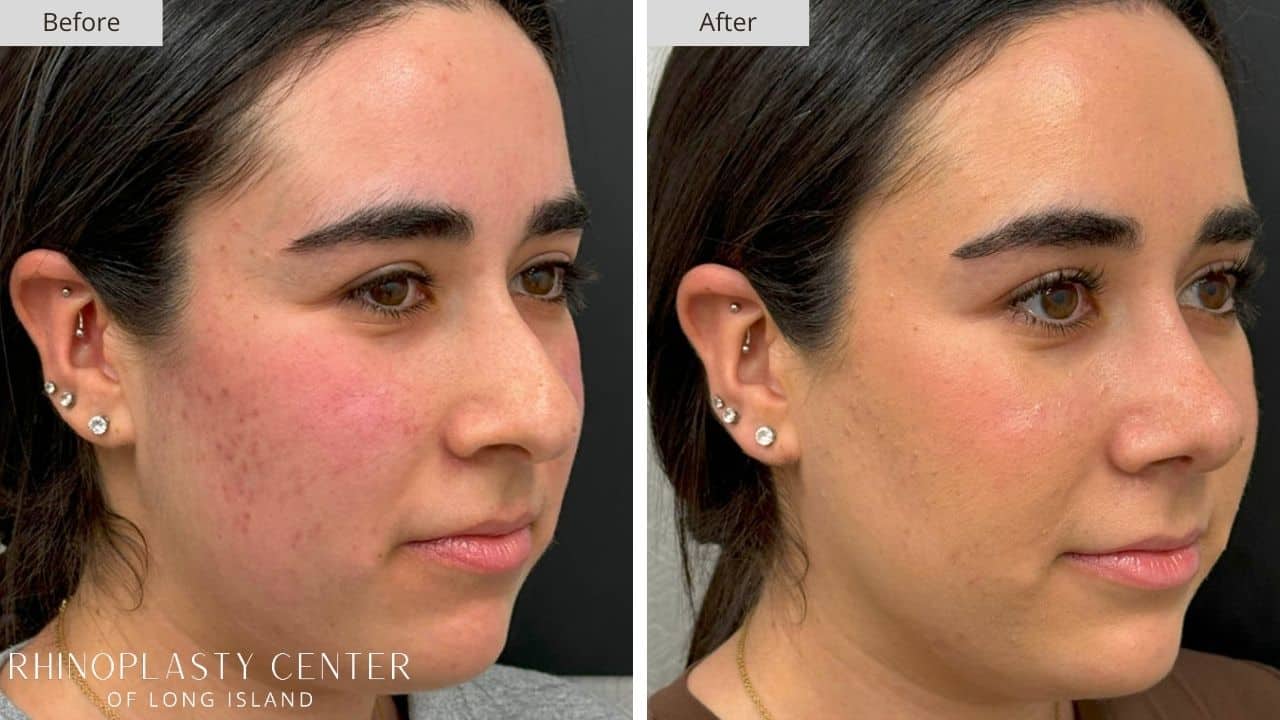
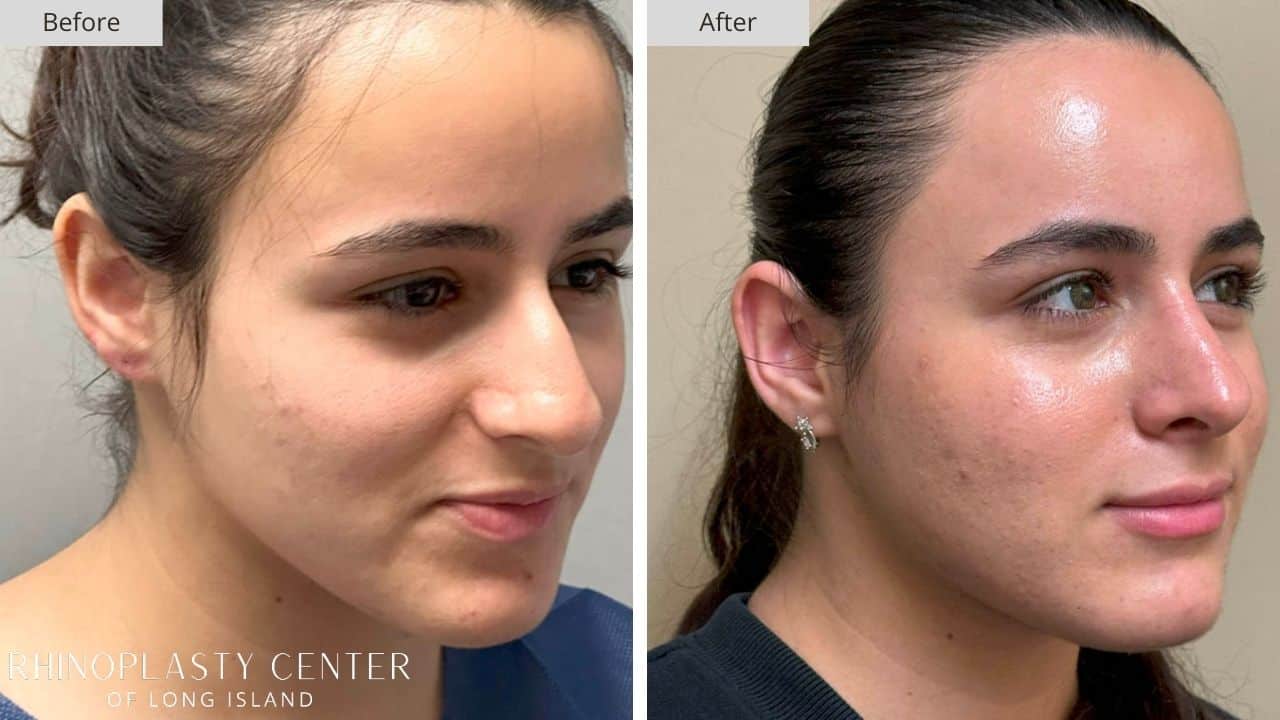
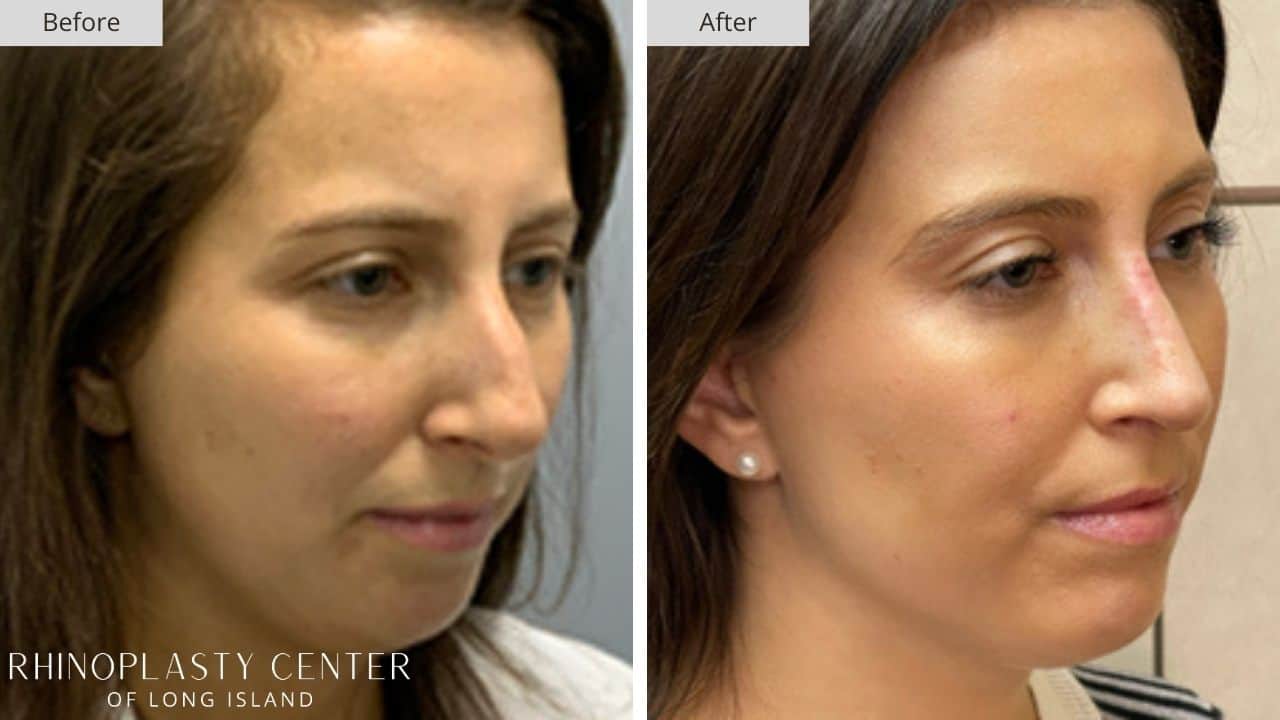
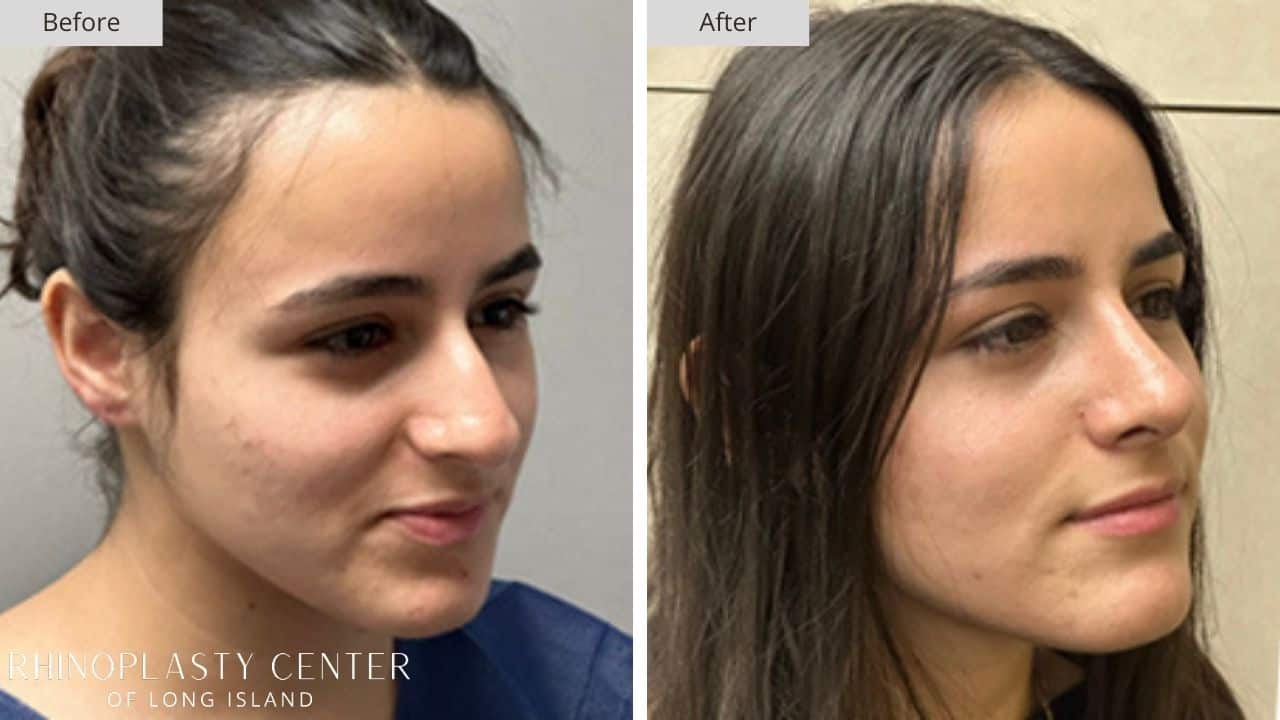
Before & After Results
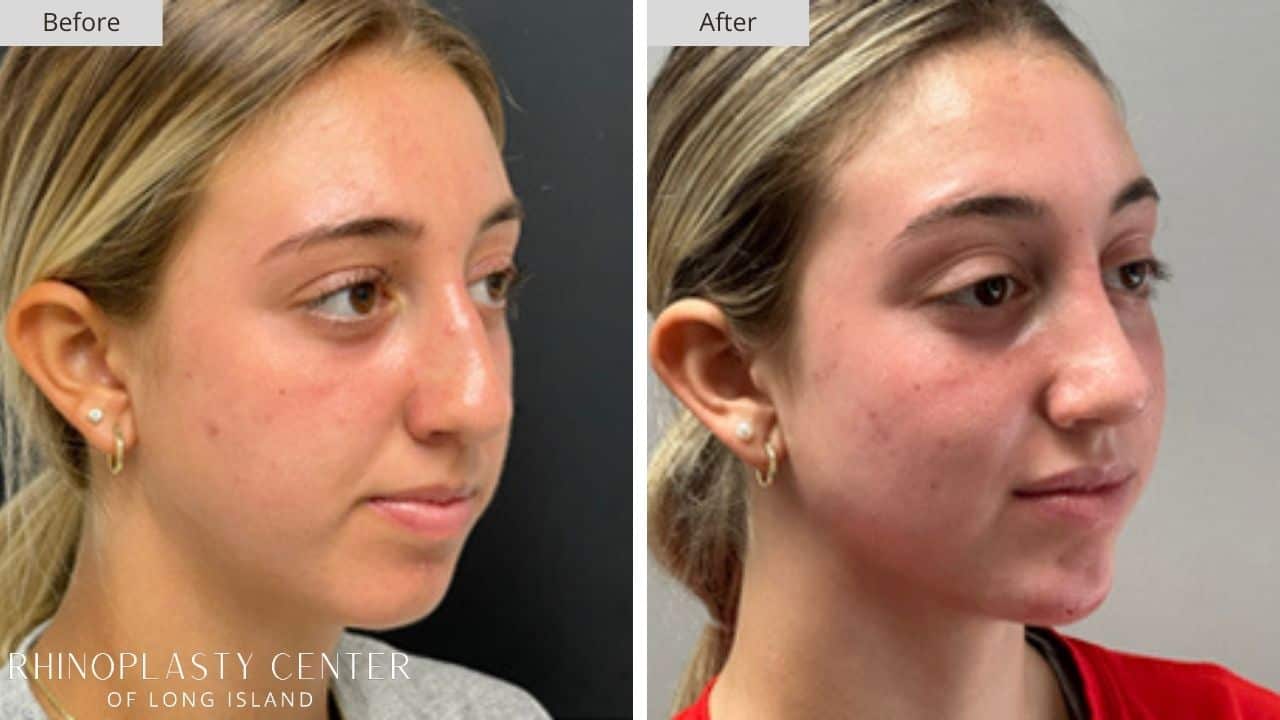
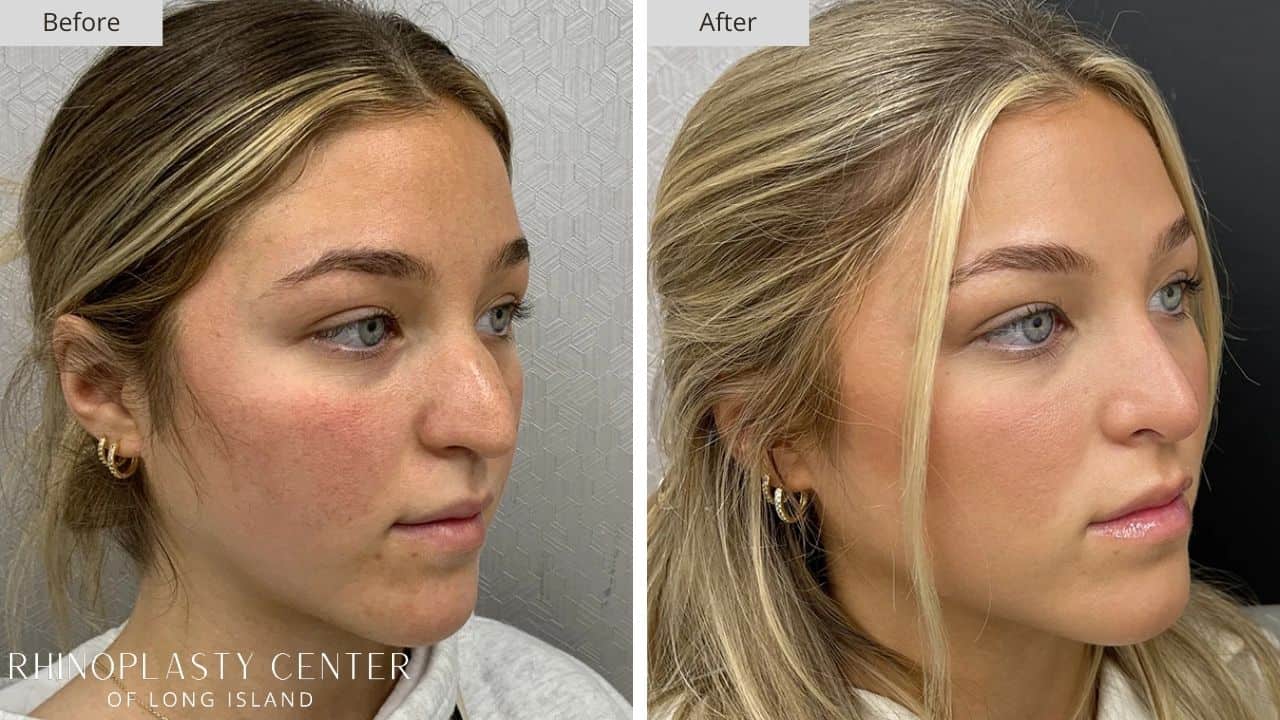
These photos show bulbous tip patients treated at the Rhinoplasty Center of Long Island. Compare the tip in each set to see how a rounder, wider tip can be refined into a slimmer, more defined shape.
Benefits of Bulbous Tip Rhinoplasty
Bulbous tip rhinoplasty offers several benefits that can improve both your appearance and how you feel about your nose. Here is what many patients notice once healing is complete.
Ideal Candidates for Bulbous Tip Rhinoplasty
Good candidates have a tip that looks round or wide because of the shape of the cartilage underneath. The points below can help you see whether that sounds like you.
Wide or Rounded Tip Cartilage
The cartilage at the end of your nose is broad, strongly curved, or spread apart.
A Tip That Lacks Definition
The tip looks soft or blurry in photos, with no clear points where light catches it.
Skin Thickness That Fits Your Goals
Thinner skin shows changes sooner, while thicker skin needs more support and more patience.
A Nose That Has Finished Growing
Tip cartilage reaches its adult shape in the mid to late teens, so surgery waits until then.
Patience for Tip Swelling
The tip is the last area to settle, and final refinement can take a year or more.
A Bridge That Fits or Needs Small Changes
Your bridge suits your face, or only needs minor work alongside the tip.
Every bulbous tip plan begins with a close exam at our Long Island office.
A free bulbous tip consultation is your first step toward a more refined nose.
How Bulbous Tip Rhinoplasty Refines Your Tip
The tip of the nose is shaped mainly by two curved pieces of cartilage. These cartilages meet in the middle and form the front of the tip.
A rounded or bulbous tip can happen when these cartilages are wide, strongly curved, or set far apart. Thick skin or extra soft tissue over the tip can also make it look fuller.
Skin thickness has a major effect on tip surgery:
- Thin skin: Changes to the cartilage show more clearly, but small irregularities may also be easier to see.
- Thick skin: Changes appear softer, and swelling usually takes longer to go away.
During surgery, a small strip may be removed from the upper edge of each tip cartilage. The stronger lower edge is preserved for support. Fine stitches are then used to bring the two domes of the tip closer together, which narrows the tip.
Small cartilage grafts may be added to strengthen the tip or improve definition, especially in patients with thicker skin. Some soft tissue beneath the skin may also be carefully thinned.
The goal is to refine the tip while keeping it well supported. Removing too much cartilage can make the tip look pinched and weaken it over time.
“We tell every bulbous tip patient the same thing at the first visit. Skin thickness matters as much as the cartilage underneath. Thick skin can hide fine work, so we check it by hand and set honest goals before we plan anything. Most of our tip refinements are done closed, with no scar on the underside of the nose.”
What to Expect During a Consultation at Our Long Island Office
Your visit starts with Dr. Hoschander asking what bothers you about your tip and how you want it to look from the front and side. He then feels the tip to judge skin thickness and cartilage strength, since both shape what is possible.
He also checks your bridge, nostrils, and the inside of your nose for any breathing problems. Photos from several angles help him explain which changes will show clearly and how long the tip may take to settle.
Our team at the Rhinoplasty Center of Long Island helps plan your surgery date around work, school, and summer plans.
How to Prepare for Your Bulbous Tip Rhinoplasty
A little planning before surgery makes the first week at home much easier. Here is what to set up ahead of time.
Sun Protection
Buy a broad-spectrum sunscreen and a wide hat, since sun can prolong redness and swelling.
Cold Compresses
Keep gel packs ready for your cheeks and eyes to ease swelling in the first days.
Raised Sleep Setup
Stack two or three pillows or use a foam wedge so your head stays raised through the night.
Gentle Skin Care
Switch to a mild cleanser, since the skin over your tip will be tender for weeks.
Medication Review
Stop aspirin, ibuprofen, and certain supplements as directed, since they can raise your risk of bleeding.
Transportation
Arrange for someone to drive you home and stay with you for the first night.
Bulbous tip patients on Long Island who prepare early tend to settle in more easily.
Your Bulbous Tip Rhinoplasty, Step by Step
Tip work is detailed, so each step builds carefully on the last one. Here is how a typical surgery day unfolds.
Bulbous Tip Rhinoplasty Techniques
A bulbous tip can be refined through more than one rhinoplasty approach. The right choice depends on how much change you want and how your cartilage and skin are built.
Closed Approach
All cuts stay inside the nostrils, so there is no outside scar. This is the approach used in the majority of rhinoplasty cases at the Rhinoplasty Center of Long Island, including most tip refinement. It typically means less swelling and a quicker return to your routine, while still allowing precise trimming, stitching, and grafting.
Open Approach
In select cases, a tiny cut is added across the strip of skin between the nostrils so the tip skin can be lifted for a full view. This may be used for complex tip changes or revision work. The small scar typically fades well and is hard to spot.
Bulbous Tip Rhinoplasty Recovery Timeline
Recovery from bulbous tip rhinoplasty on Long Island takes patience, since the tip holds swelling longer than any other part of the nose. Every patient heals at their own pace, so treat this timeline as a general guide.
Days 1-3
Your tip will feel tight and swollen, and some bruising may show near the eyes. You’ll rest with your head raised and use cold compresses on your cheeks.
Week 1
The splint and tape usually come off at your one-week visit. Many patients return to desk work soon after, though the tip still looks full.
Weeks 2-4
Bruising fades and the nose starts to look more natural. You can return to light activity during this period, though the tip may feel firm and numb.
Weeks 6-8
You can usually return to full workouts at this stage. The tip shape is clearer, though it will keep slimming down for many months.
Months 3-6
Tip definition improves steadily as swelling drains away. Sunscreen and a hat on Fire Island beach days help keep the tip from staying red or puffy.
12-18 Months
Thicker skin may need this full window, but the tip reaches its final shape by now. Most patients see a slimmer, more defined tip at this stage.

Recovery Tips
Why Choose Us for Bulbous Tip Rhinoplasty
Dr. Hoschander is a board-certified plastic surgeon with more than 20 years of surgical experience and a practice built around the nose. For bulbous tip rhinoplasty, Long Island patients get a plan that weighs cartilage shape and skin thickness together, so expectations and results line up.

Stitch-Based Tip Shaping
He relies on fine stitches and light trimming to narrow the tip instead of removing large pieces. This keeps the tip strong and helps it avoid a pinched look over time.
Definition That Suits Your Skin
He plans tip changes around your skin thickness, which shapes how much definition can show. Grafts add support under thicker skin, so the refined shape comes through as swelling fades.
Guidance Through Tip Swelling
He tracks your tip through each stage, since it settles more slowly than the rest of your nose. Clear aftercare and close follow-up help our team spot any concerns early.
Frequently Asked Questions About Bulbous Tip Rhinoplasty
Tip refinement is one of the most detailed parts of rhinoplasty. These are the questions bulbous tip patients bring to our Long Island office most often.
Why Choose the Rhinoplasty Center of Long Island?
At the Rhinoplasty Center of Long Island, we’re dedicated to providing exceptional rhinoplasty care from your first consultation to your final results. Whether you’re located in Nassau or Suffolk County, our team is here to guide and support you throughout the entire process.
We specialize in a range of rhinoplasty techniques that cover all types of noses and focus on delivering results that meet your unique needs. Whether you’re considering cosmetic, functional, or revision rhinoplasty, our expertise ensures you achieve the look and function you have always wanted.
Have questions or ready to book your in-person or virtual consultation? Contact the Rhinoplasty Center of Long Island today. We’re here to help!
Rhinoplasty Center of Long Island
1201 Northern Blvd #2A
Manhasset, NY 11030
(516) 928-4480