
Crooked Nose Rhinoplasty on Long Island
If your nose curves to one side or looks off center, Dr. Ari Hoschander can straighten it on Long Island and improve your breathing when needed.
Does Your Nose Lean to One Side?
A nose that leans or curves can draw the eye even when the rest of your face looks balanced. Many people looking into crooked nose surgery on Long Island first noticed it in photos, and now they cannot stop seeing it.
Crooked nose rhinoplasty straightens the bones, cartilage, and septum that pull your nose off center, so it sits more evenly in the middle of your face. Dr. Hoschander treats each part that leans, since a fix to only one part usually leaves the nose crooked. Patients from towns all across Long Island come to our Manhasset office for this detailed work.
The surgery is usually done through small cuts inside the nostrils, with a tiny cut between them added only in select cases. The septum is straightened, the nasal bones are moved back toward the center, and the cartilage is braced so it holds its new line. At the Rhinoplasty Center of Long Island, the goal is a nose that looks straighter and breathes better.
Book a consultation to see how much straighter your nose can look.
Crooked Nose Rhinoplasty at a Glance
Before & After Results
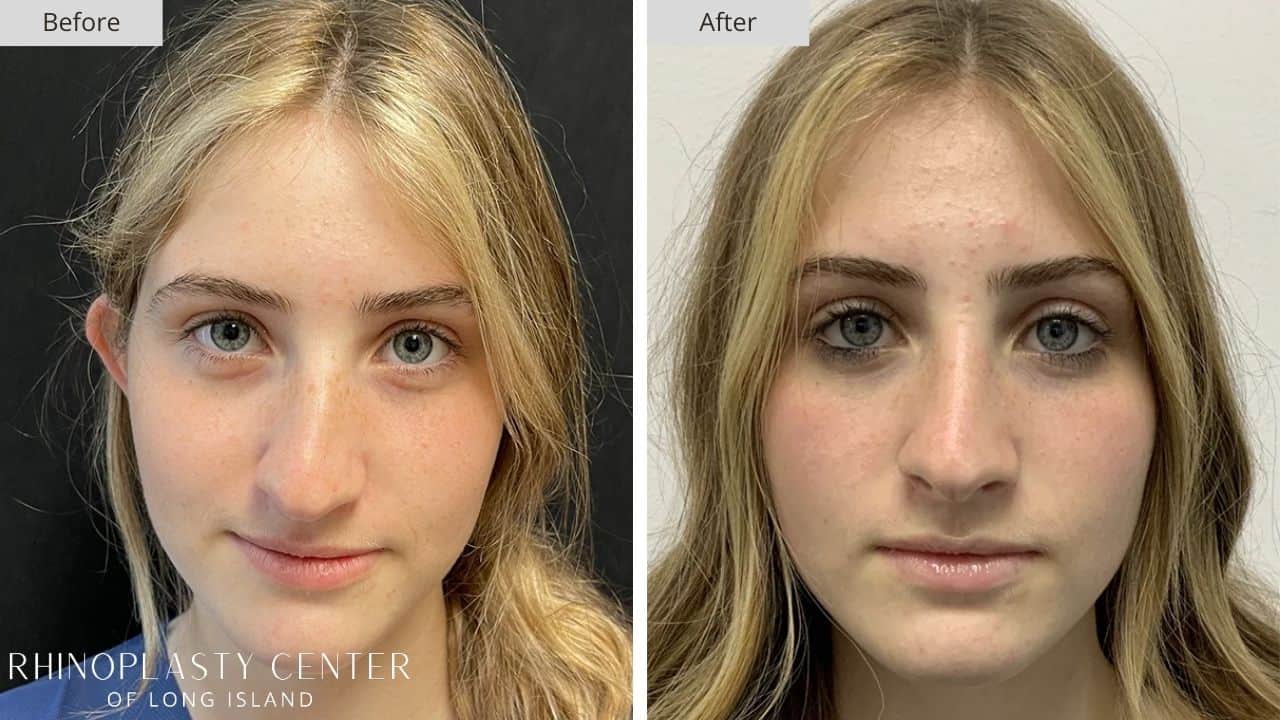
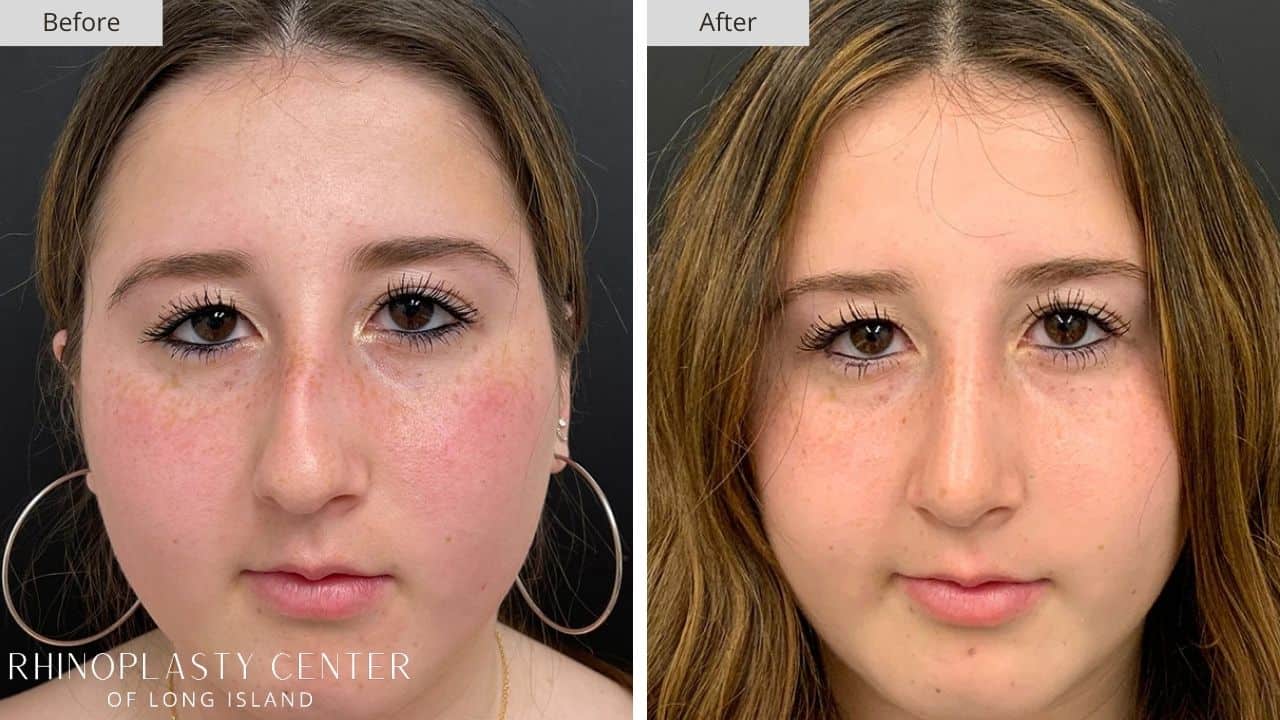
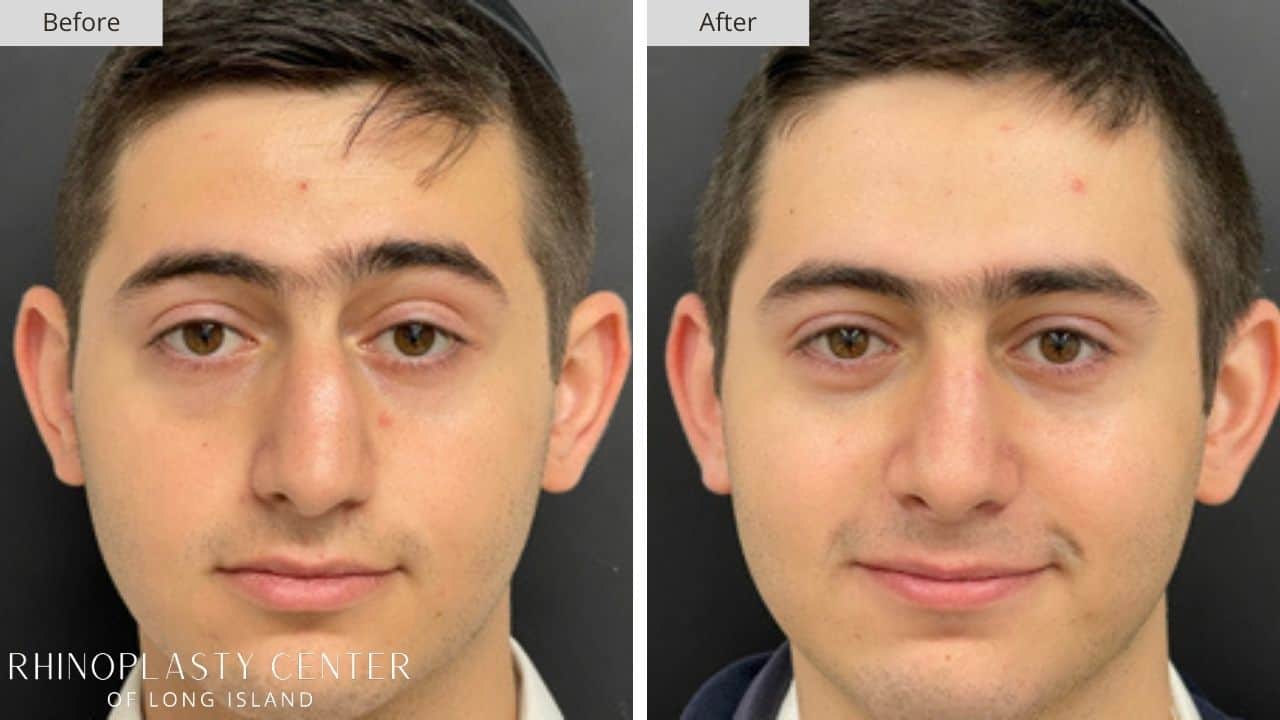
These photos show crooked nose patients treated at the Rhinoplasty Center of Long Island. The front-facing shots show the change best, with a nose that sits straighter and more centered on the face.
Benefits of Crooked Nose Rhinoplasty
Crooked nose rhinoplasty offers several benefits that can improve both your appearance and your daily comfort. Here is what many patients notice once healing is complete.
Ideal Candidates for Crooked Nose Rhinoplasty
Good candidates have a nose that leans because of its bones, cartilage, septum, or a mix of these. The points below can help you see whether that sounds like you.
Nose That Curves or Tilts
Your bridge forms a C-shape, an S-shape, or leans straight to one side.
A Tip That Points Off Center
The bridge looks fairly straight, but the tip angles toward one cheek.
Septum That Leans Inside
A bent septum pulls the nose off center and may block one side.
An Old Break That Healed Crooked
The bones set off center after a broken nose injury, and they have fully healed.
Clear Goals About Straightness
You want a nose that looks clearly straighter, while you accept that faces are never perfectly even.
A Nose That Has Finished Growing
The nose reaches adult size in the mid to late teens, so surgery waits until then.
Crooked nose patients on Long Island start with a full exam at our office.
A free crooked nose consultation is your first step toward a straighter, more balanced nose.
How Crooked Nose Rhinoplasty Straightens Your Nose
A crooked nose can involve several structures. The nasal bones and side cartilages form the bridge, while the septum runs down the middle and supports the nose.
There are three common causes of a crooked nose:
- Deviated septum: If the septum is bent, it can pull the nose off center.
- Shifted nasal bones: If the bones are out of position, the bridge can look crooked even when the septum is straight.
- Uneven tip cartilage: If the tip cartilages are not symmetrical, the tip can point to one side.
Many crooked noses have more than one of these problems. That is why straightening the septum alone often does not fully straighten the outside of the nose.
During surgery, the septum is usually corrected first because it supports the rest of the nose. Bent sections are removed or repositioned, and an L-shaped section is left in place for support.
Our surgeon may then make small, controlled cuts in the nasal bones so they can be moved toward the center. Spreader grafts, which are thin strips of cartilage placed along the septum, may be used to straighten and support the middle of the nose.
Cartilage tends to move back toward its original shape after surgery. Grafts and stitches help hold it in its new position, so the nose stays straighter over time.
“A crooked nose is rarely crooked in just one place. The bones, the septum, and the tip can each lean a different way. We look at all three before we plan surgery. A nose straightened only on the outside can drift back if the septum still pulls it.”
What to Expect During a Consultation at Our Long Island Office
Your visit starts with Dr. Hoschander studying your nose from the front, sides, and below to see exactly where it leans. He also asks about past injuries and how your breathing feels, since both often tie back to the same bend.
He then looks inside your nose with a light to check the septum and airway. Photos help him point out which parts are crooked, how much straighter they can become, and where your face itself is naturally uneven.
Our team at the Rhinoplasty Center of Long Island can help check whether insurance covers the breathing part of your surgery. We also help you choose a date that fits around work or school plans.
How to Prepare for Your Crooked Nose Rhinoplasty
A little planning before surgery makes the first week at home much easier. Here is what to set up ahead of time.
Glasses Plan
Arrange contacts or a cheek-resting frame, since glasses can push healing bones off center.
Back-Sleeping Setup
Practice sleeping on your back with pillows on each side, so you don’t press your nose overnight.
Cold Compresses
Keep gel packs ready to calm swelling and bruising around your eyes during the first days.
Saline and Humidifier
Buy saline spray and set up a humidifier to ease dryness inside your healing nose.
Medication Review
Stop aspirin, ibuprofen, and certain supplements as directed, since they can raise your risk of bleeding.
Transportation
Arrange for someone to drive you home and stay with you for the first night.
A little planning makes crooked nose recovery on Long Island much smoother.
Your Crooked Nose Rhinoplasty, Step by Step
A crooked nose is straightened from the inside out, so each step builds on the one before it. Here is how a typical surgery day unfolds.
Crooked Nose Rhinoplasty Recovery Timeline
Recovery from crooked nose rhinoplasty on Long Island often lines up with school calendars, and many college students home from Hofstra, Adelphi, or Stony Brook plan around winter break. Every patient heals at their own pace, so treat this rhinoplasty recovery timeline as a general guide.
Days 1-3
Swelling and bruising peak around the nose and eyes, and your nose will feel stuffed. You’ll rest with your head raised and avoid any pressure on your nose.
Week 1
The cast and any inner splints usually come off at your one-week visit. Your nose will look straighter, though still swollen, and many patients return to desk work.
Weeks 2-3
Most bruising fades during this period. You can enjoy easy walks, such as a stroll along the Long Beach boardwalk, while you keep your nose safe from bumps.
Weeks 4-6
The bones are setting firmly in their new position by now. You can usually return to workouts, and glasses can rest on your nose once we approve.
Months 2-6
Swelling keeps fading, and the straighter line of your bridge becomes clearer. A slight shift in the cartilage can show during this time, so follow-up visits matter.
12 Months+
Your final shape is in view as the last swelling fades. Most patients see a clearly straighter nose that sits more evenly in the middle of their face.
Recovery Tips
Why Choose Us for Crooked Nose Rhinoplasty
Dr. Hoschander is a board-certified plastic surgeon with more than 20 years of surgical experience and a practice built around the nose. For a crooked nose, Long Island patients get a plan that corrects every part that leans, from the septum to the tip.

Inside-Out Straightening
He straightens the septum first and then aligns the bones and tip around it. This order gives your nose a centered base, so the outside line has something solid to follow.
Function and a Centered Line
He opens the airway while he straightens the outside, since a crooked nose often blocks one side. You get easier breathing and a more balanced look from one surgery.
Grafts That Hold the Line
He uses your own cartilage to brace areas that tend to spring back. Close follow-up through healing lets our team catch small shifts early, while they are easiest to address.
Frequently Asked Questions About Crooked Nose Rhinoplasty
Patients with a crooked nose often want to know if the fix will last and whether it helps their breathing. Read on for clear answers from our Long Island team.
Why Choose the Rhinoplasty Center of Long Island?
At the Rhinoplasty Center of Long Island, we’re dedicated to providing exceptional rhinoplasty care from your first consultation to your final results. Whether you’re located in Nassau or Suffolk County, our team is here to guide and support you throughout the entire process.
We specialize in a range of rhinoplasty techniques that cover all types of noses and focus on delivering results that meet your unique needs. Whether you’re considering cosmetic, functional, or revision rhinoplasty, our expertise ensures you achieve the look and function you have always wanted.
Have questions or ready to book your in-person or virtual consultation? Contact the Rhinoplasty Center of Long Island today. We’re here to help!
Rhinoplasty Center of Long Island
1201 Northern Blvd #2A
Manhasset, NY 11030
(516) 928-4480