
Drooping Tip Rhinoplasty on Long Island
If the tip of your nose points down or dips when you smile, Dr. Ari Hoschander can lift and support it on Long Island.
Does Your Nose Tip Droop When You Smile?
A tip that points down can make your nose look longer and your face look more tired than you feel. Many people asking about drooping tip surgery on Long Island first notice it in candid photos, when a smile pulls the tip even lower.
Drooping tip rhinoplasty lifts and supports the end of your nose so it sits at a more natural angle above your lip. Dr. Hoschander looks at both the cartilage that holds the tip up and the small muscle that pulls it down, so the lift holds when you smile. Patients from all over Long Island visit our Manhasset office for this focused tip work.
The surgery is usually done through small cuts inside the nostrils, so no scar shows on the outside. In some cases, a tiny cut between the nostrils is added for a clearer view. Cartilage is reshaped and braced, often with a small graft from your septum, and the tip is set at its new height with fine stitches. At the Rhinoplasty Center of Long Island, the goal is a lifted tip that looks natural from every angle, not overly turned up.
Book a consultation to see how a lifted tip could refresh your profile.

Drooping Tip Rhinoplasty at a Glance
Before & After Results
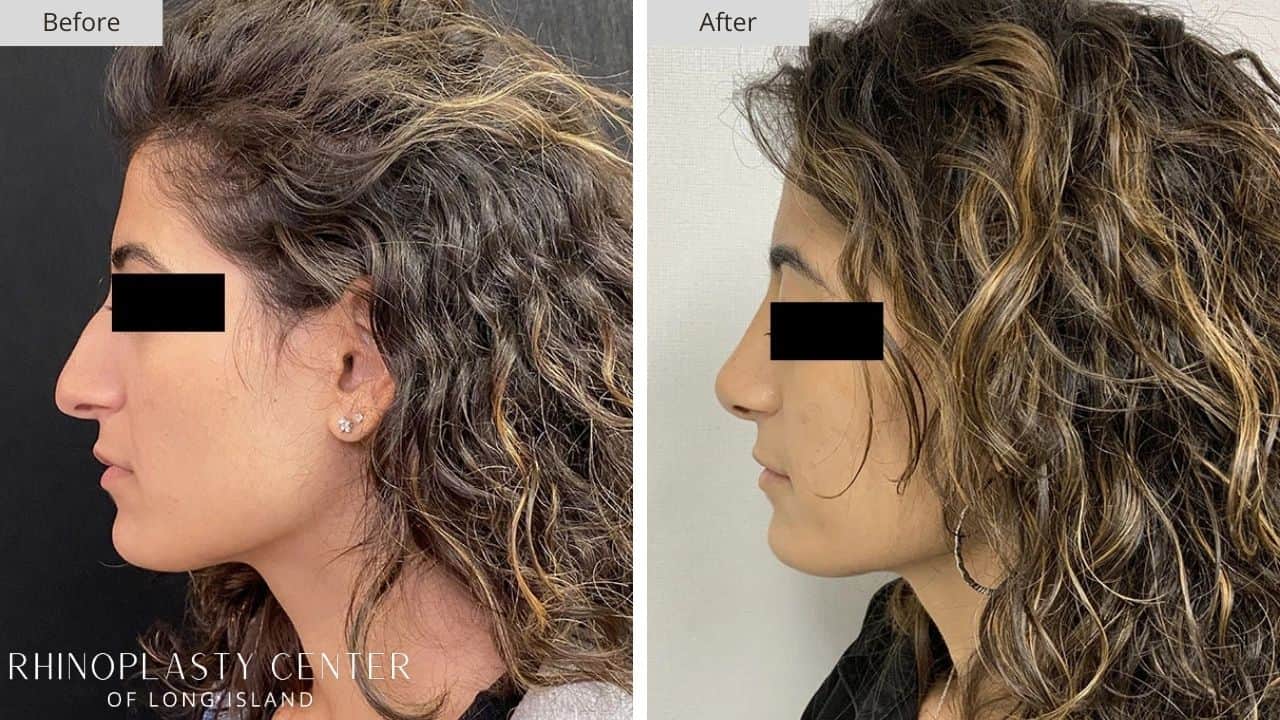
These photos show drooping tip rhinoplasty patients treated at the Rhinoplasty Center of Long Island. Look at how the tip sits higher and better supported after surgery, which can also make the whole nose look more balanced when you smile.


Benefits of Drooping Tip Rhinoplasty
Drooping tip rhinoplasty offers several benefits that can improve both your nose profile and your daily comfort. Here is what many patients notice once healing is complete.
Ideal Candidates for Drooping Tip Rhinoplasty
Good candidates have a tip that sits low because of weak support, an active tip muscle, or both. The points below can help you see whether that sounds like you.
A Tip That Points Downward
The end of your nose angles toward your lip instead of sitting level or slightly up.
Tip That Dips When You Smile
Your tip drops and your upper lip shortens each time you smile, a sign of an active tip muscle.
Tip Support That Has Weakened With Age
The ligaments and cartilage that hold up the tip loosen over time, which lets it sag.
Long Nose With a Hump
A bump on the bridge combined with a low tip makes the nose look longer than it is.
Strong Enough Septum for Grafts
Healthy septal cartilage can be used to brace the tip and keep it lifted.
Nose That Has Finished Growing
Tip cartilage reaches its adult shape in the mid to late teens, so surgery waits until then.
An exam at our Long Island office shows how much drooping tip lift fits you.
A free drooping tip consultation is your first step toward a lifted profile.
How Drooping Tip Rhinoplasty Lifts Your Tip
A drooping nasal tip happens when the tip loses support. The septum supports the tip from below, while small ligaments connect the tip cartilages to nearby structures.
The tip may droop because of genetics, a previous surgery, or natural weakening of these support structures with age.
A small muscle under the nose, called the depressor septi, can also pull the tip downward. In some people, this muscle is strong enough to make the tip drop when they smile.
During surgery, the surgeon first strengthens the support of the tip. Common grafts include:
- Columellar strut graft: A small strip of cartilage is placed between the tip cartilages to add support.
- Septal extension graft: Cartilage is attached to the septum to hold the tip in a new position.
Cartilage for these grafts usually comes from the septum.
Fine stitches are then used to lift and secure the tip. If the depressor septi muscle is very active, it can be released or repositioned so it pulls the tip down less when smiling.
The goal is to raise the tip slightly and improve the angle between the nose and upper lip so it fits the rest of the face.
“A drooping tip often shows up most when someone smiles. We ask patients to smile during the consultation so we can see how the tip moves. The fix is about support, not just lift. A tip that is raised without the right support can drop again over time.”
What to Expect During a Consultation at Our Long Island Office
Your visit starts with Dr. Hoschander studying your tip from the front and side, both at rest and while you smile. He then asks how you want your tip to sit, since some patients prefer a subtle lift and others want more.
He also feels the tip to judge cartilage strength and checks the septum, which often supplies the graft used for support. Photos help him show how much lift suits your face and lip.
Our team at the Rhinoplasty Center of Long Island helps you plan surgery around work and family schedules.
How to Prepare for Your Drooping Tip Rhinoplasty
A little planning before surgery makes the first week at home much easier. Here is what to set up ahead of time.
Cold Compresses
Keep gel packs ready to calm swelling around your nose and eyes in the first days.
Soft Foods
Stock up on easy-to-chew foods, since big bites and wide smiles can strain the healing tip.
Raised Sleep Setup
Set up a wedge or extra pillows so your head stays raised while swelling settles.
Glasses Plan
Arrange contacts or a cheek-resting frame in case your bridge also needs protection while it heals.
Medication Review
Stop aspirin, ibuprofen, and certain supplements as directed, since they can raise your risk of bleeding.
Transportation
Arrange for someone to drive you home and stay with you for the first night.
These steps make drooping tip recovery on Long Island calmer from the start.
Your Drooping Tip Rhinoplasty, Step by Step
Drooping tip surgery follows a clear order, since the tip needs a strong base before it can be lifted. Here is how a typical surgery day unfolds.
Drooping Tip Rhinoplasty Recovery Timeline
Recovery from drooping tip rhinoplasty on Long Island moves in stages, and the tip is the last area to fully settle. Every patient heals at their own pace, so treat this timeline as a general guide.
Days 1-3
Your tip will feel tight and swollen, and your upper lip may feel stiff. You’ll rest with your head raised and keep big smiles and wide yawns gentle.
Week 1
The splint and tape usually come off at your one-week visit. Many patients feel ready for desk work by the end of this week.
Weeks 2-3
Bruising fades during this period, and the tip may look a bit higher than planned. This is normal swelling, and it eases as healing continues.
Weeks 4-6
You can usually return to workouts at this stage. A round at Bethpage or a tennis match is often back on the schedule, though contact sports should wait.
Months 2-6
The tip drifts toward its final angle as swelling fades. Stiffness in the upper lip during smiles usually eases fully during this period.
12 Months+
The last tip swelling is gone, and your final profile shows. Most patients enjoy a lifted tip that stays steady, even when they smile.

Recovery Tips
Why Choose Us for Drooping Tip Rhinoplasty
Dr. Hoschander is a board-certified plastic surgeon with more than 20 years of surgical experience and a practice built around the nose. Long Island patients with a drooping tip get a plan that addresses both tip support and the muscle that pulls it down, so the lift lasts.

Built-In Tip Support
He braces the tip with your own cartilage before he lifts it, which gives it a firm base. This structure helps the tip hold its new height instead of sinking back over time.
Natural Angle, Never Overdone
He sets the tip angle to suit your face, lip, and profile. The goal is a gentle lift that looks like your own nose, not a tip that points too far up.
Steady Tip When You Smile
He checks how your tip moves as you smile and treats the muscle that pulls it down when needed. This step helps your result look natural in photos and conversation.
Frequently Asked Questions About Drooping Tip Rhinoplasty
Most drooping tip questions center on support and how long the lift lasts. Our team answers those and other common concerns here.
Why Choose the Rhinoplasty Center of Long Island?
At the Rhinoplasty Center of Long Island, we’re dedicated to providing exceptional rhinoplasty care from your first consultation to your final results. Whether you’re located in Nassau or Suffolk County, our team is here to guide and support you throughout the entire process.
We specialize in a range of rhinoplasty techniques that cover all types of noses and focus on delivering results that meet your unique needs. Whether you’re considering cosmetic, functional, or revision rhinoplasty, our expertise ensures you achieve the look and function you have always wanted.
Have questions or ready to book your in-person or virtual consultation? Contact the Rhinoplasty Center of Long Island today. We’re here to help!
Rhinoplasty Center of Long Island
1201 Northern Blvd #2A
Manhasset, NY 11030
(516) 928-4480